Caregiver jobs with no experience: where to start
Anúncios
You do not need a nursing degree to land your first caregiver job in the U.S.
Agencies and families regularly hire beginners for companion and personal care roles, then train them on the job.
Below you will see which roles accept newcomers, what employers check and how to stand out from the first application.
- Entry roles: companion caregiver, personal care aide and in-home helper.
- Typical schooling: a high school diploma or equivalent, with no prior work experience required.
- Hiring outlook: about 765,800 openings a year projected through 2034, according to BLS.
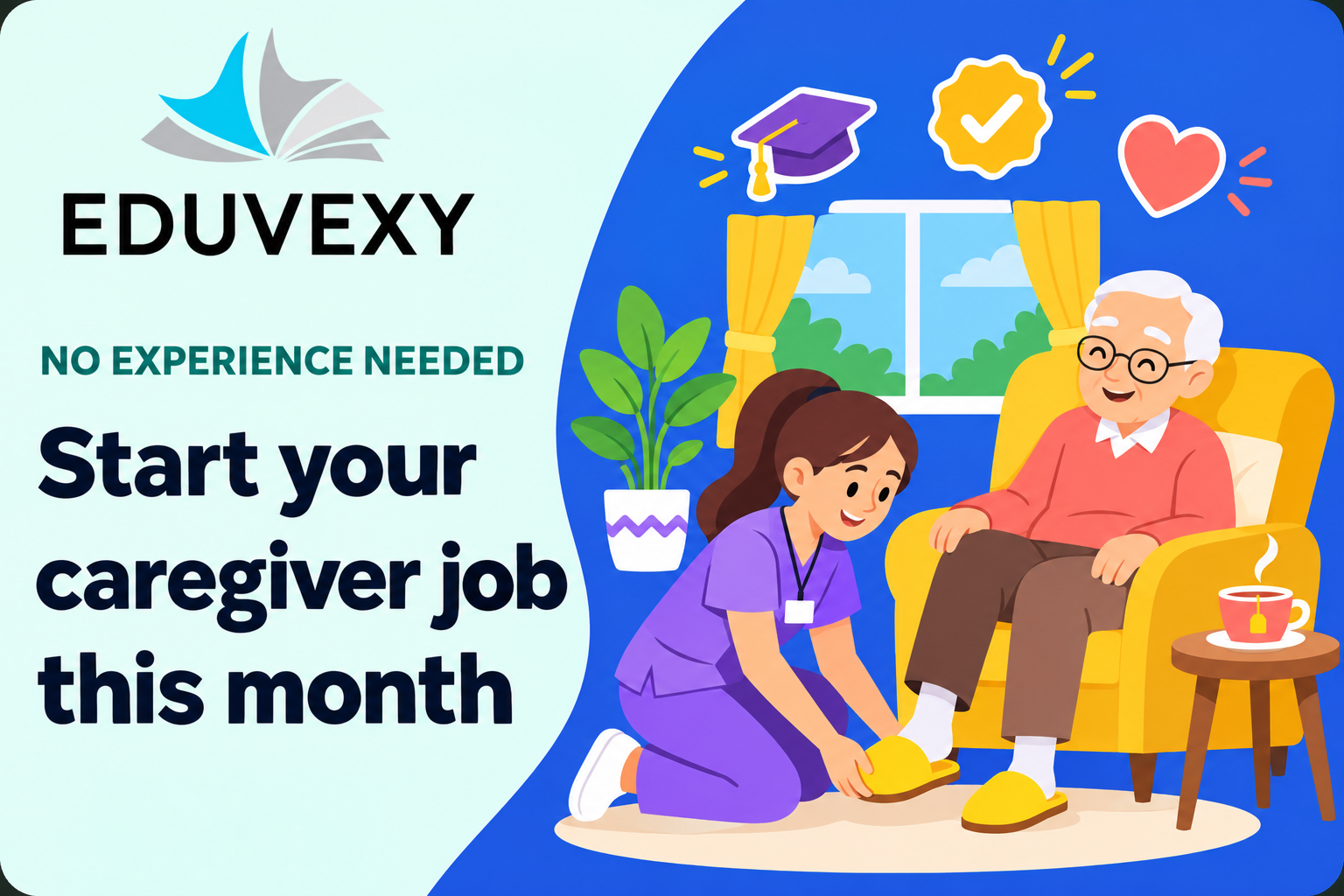
Starting from zero is common in this field, so the real question is which door to knock on first and how to show you are ready for the responsibility.
Roles that usually accept beginners
These positions tend to be the easiest way in, because the tasks are learned quickly on the job.
- Companion caregiver: keeping an older adult company, playing games, reading and going on short walks.
- Personal care aide: helping with bathing, dressing and grooming under a care plan.
- Respite caregiver: covering a few hours so a family member can rest or run errands.
- Overnight sitter: staying awake or on call at night to keep the client safe.
- Errand helper: grocery runs, pharmacy pickups and rides to appointments.
- Meal assistant: preparing simple meals and making sure the client eats and drinks enough.
Home health aide jobs at Medicare-certified agencies also hire beginners, but only after they finish approved training.
Why caregiving works well as a first job
Few entry-level fields offer the same mix of steady demand and real responsibility from day one.
-
On-the-job training
Many agencies teach safe transfers, hygiene routines and reporting during orientation.
-
Growing field
BLS projects 17% employment growth from 2024 to 2034, much faster than average.
-
Flexible hours
Short visits, weekend coverage and overnight shifts make it easier to combine with school.
-
Skills that carry over
CPR, patient care and communication skills count in any healthcare job later on.
Where beginners find caregiver openings
Two channels bring most first jobs, and each works a little differently.
- Home care agencies: they screen you, provide training and match you with clients near your ZIP code.
- Family job platforms: families post openings and choose caregivers directly after an interview.
Senior living communities and adult day centers also hire newcomers for set shifts, often with a supervisor nearby.
Worth knowing: Care.com connects caregivers and families, but it is not the employer.
Traits employers look for in new caregivers
Without a work history, your personal qualities carry most of the weight in an interview.
- Patience: staying calm when a client is confused, slow or upset.
- Reliability: arriving on time, every time, because families plan their day around you.
- Physical stamina: being comfortable on your feet and helping someone move safely.
Caring for a grandparent, a sibling or a neighbor counts as real experience, so mention it clearly.
Your first steps toward getting hired
A simple sequence keeps the process short and organized.
- Get CPR and first aid certified: short courses that many employers value right away.
- Build a clear profile: list the days you can work, the area you cover and any languages you speak.
- Prepare for screening: keep your ID and two references ready for the background check.
Agencies with many clients waiting tend to move fast, sometimes within a week of the interview.
Pros and cons for first-time caregivers
A clear view of both sides helps you decide if this path fits your life.
-
Low barrier to entry
No degree, no license and often no prior job are needed for companion roles.
-
Personal connection
Working with one client builds a bond that many caregivers find rewarding.
-
Jobs near home
Clients live in every neighborhood, which tends to keep commutes short.
-
Entry pay is modest
Beginners often start below the national median until they add skills or certifications.
-
Emotionally heavy days
Watching a client’s health decline is one of the hardest parts of the job.
Training and certificates that open more doors
None of these is mandatory for every role, but each one tends to widen your options.
- CPR and first aid: usually a one-day class and one of the first things families ask about.
- HHA training: at least 75 hours, including 16 supervised practical hours, for Medicare-certified agencies.
- Dementia care course: a specialty that agencies often need and pay more for.
- Driver’s license: required for roles that include errands and rides to appointments.
Several states require more training hours than the federal minimum, so your state health department is the best place to confirm the rules.
Why Eduvexy points beginners to caregiving
We track entry-level careers closely, and caregiving stands out for how quickly a newcomer can go from zero to a paid shift.
It also works as a launchpad: a year of hands-on care gives you real experience for CNA programs, medical assistant roles or nursing school.
- Demand is projected to grow much faster than average.
- Entry requirements are realistic for people with no work history.
- Schedules can usually be built around family or classes.
- Experience counts toward future healthcare training.
What your first year can bring
The first months in caregiving tend to shape your confidence and your next career move.
- Strong references: satisfied families and supervisors open doors to better-paid roles.
- Practical know-how: safe lifting, daily routines and clear reports to nurses.
- Career clarity: a better sense of whether nursing or another health path suits you.
Many caregivers raise their hourly rate after the first year by adding a certificate or a specialty.
How to apply for your first caregiver job
A ready profile and organized documents make the first application much faster.
- Search smart: combine “caregiver” with your city and the shift you want.
- Reply quickly: families tend to choose the candidates who answer first and clearly.
You will be redirected to another site
Caregiving compared with other first jobs
If you are choosing between several entry-level options, these comparisons put caregiving in context.
- Fast food: similar starting pay in many areas, but less personal and with fewer paths into healthcare.
- Retail cashier: easy to get, yet schedules are often set by the store with little flexibility.
- CNA: higher median pay, though it requires a state-approved program and a certification exam.
For many newcomers, caregiving is the step that makes a later CNA or nursing program feel realistic.
Frequently asked questions
Can I really get a caregiver job with no experience?
Yes, in many cases. Companion and personal care roles often hire beginners and provide training, especially at agencies with many clients.
Do I need a certificate before applying?
Not for every role. CPR and first aid help, and home health aide positions at Medicare-certified agencies require approved training first.
How old do I have to be?
Most employers look for adults, usually 18 or older, but the exact minimum depends on the agency and on your state’s rules.
Will family caregiving count as experience?
It usually does. Describe what you did, such as meals, mobility help or medication reminders, and for how long.
How long does hiring take?
It varies, but agencies with high demand often complete interviews, checks and orientation within one to two weeks.
Tips to stand out without experience
Small details often decide which beginner gets the first call.
- Specific availability: exact days and hours are easier to schedule than “anytime”.
- Short personal note: one sentence on why you enjoy helping people makes your profile memorable.
- Languages: being bilingual tends to open more doors with families.
- Friendly photo: a clear, well-lit picture builds trust at first glance.
Updating your profile every time you finish a course keeps it near the top of employer searches.
Final thoughts
Caregiver jobs with no experience are a real, accessible entry point into steady work in the United States.
The pay starts modest, but short training and flexible shifts make the field practical for students, parents and career changers.
Choosing the right role, preparing your documents and highlighting family caregiving can shorten the path to your first shift.
With a clear profile and a basic certificate or two, your first caregiver job tends to be closer than it looks.

Eduvexy Editorial Team
Eduvexy publishes practical guides on careers, training and opportunities in the United States. We are not an employer and do not recruit candidates; we explain requirements, pay and hiring steps so you can choose with confidence.
Learn about our work