Caregiver requirements and home health aide pay
Anúncios
Before applying for any caregiver job, two questions matter most: what employers require and what the work pays.
The answers change by role, by state and by whether you work for an agency or a family.
This page brings together the official numbers and the most common requirements in one place.
- National median: about $17.21 per hour, or $35,800 per year (BLS, May 2025).
- Pay range: from about $27,040 at the 10th percentile to $45,040 at the 90th.
- Workforce size: around 4.3 million home health and personal care aide jobs in 2024.
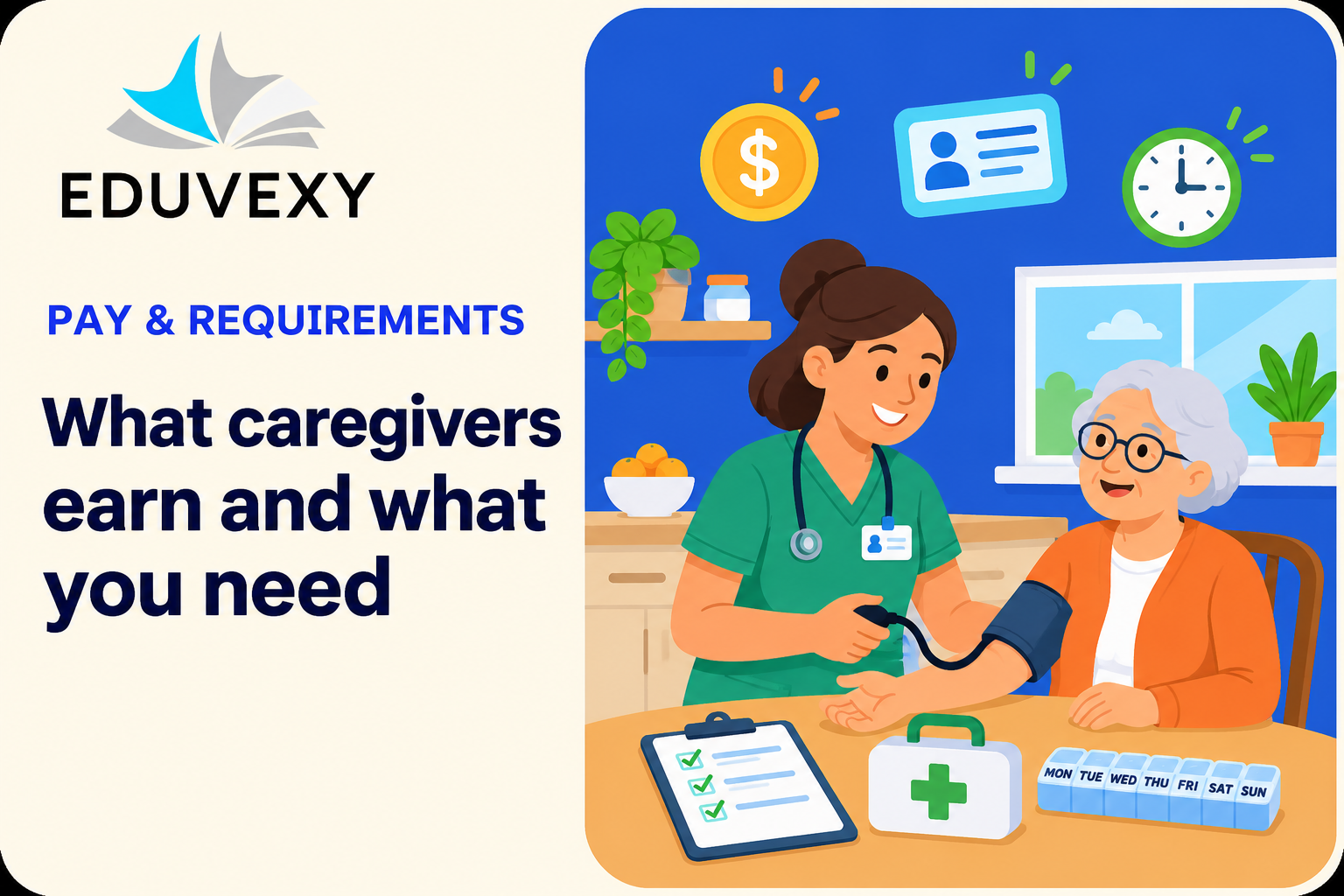
Knowing the requirements upfront saves time, because the wrong application often stalls at the background check or the training stage.
Common caregiver requirements
Most employers ask for a similar core set, with extra steps for home health aide roles.
- Education: a high school diploma or equivalent is typical, and some companion roles skip it.
- Background check: nearly universal, since caregivers work with vulnerable adults.
- Health screening: some agencies ask for a TB test or proof of certain vaccinations.
- CPR and first aid: frequently requested, and often offered during orientation.
- Driver’s license: needed when the job includes errands or rides to appointments.
- HHA training: at least 75 hours, with 16 supervised practical hours, at Medicare-certified agencies.
- Competency check: HHAs at certified agencies must pass an evaluation before working alone.
- References: one or two contacts who can speak to your reliability.
Rules for home health aides vary from state to state, and several states require more than the federal 75 hours.
What pushes caregiver pay higher
The national median is a starting point, and several factors tend to lift the hourly rate.
-
Location
States and metro areas with higher living costs usually pay above the national median.
-
Certifications
HHA training and dementia care courses often move you into better-paid assignments.
-
Shift type
Overnight, weekend and holiday shifts sometimes carry a higher rate.
-
Languages
Bilingual caregivers tend to be in demand with families who need it.
Caregiver pay at a glance
These BLS figures cover home health and personal care aides nationwide.
| Measure | Value (BLS, May 2025) |
|---|---|
| Median hourly pay | About $17.21 |
| Median annual pay | About $35,800 |
| Bottom 10% | About $27,040 a year |
| Top 10% | About $45,040 a year |
Local pay can sit well above or below these numbers, so your state’s BLS data is the best reference before negotiating.
Agency jobs versus direct family hires
Who employs you changes how pay, hours and benefits work.
- Agency: steady assignments, payroll handled for you and sometimes benefits, with a set hourly rate.
- Direct hire: you agree on pay with the family, which may be higher but often comes without benefits.
Platforms like Care.com list family openings but do not employ caregivers, so the terms are set between you and the family.
How the hiring process usually goes
Most caregivers move through the same three stages.
- Application: a profile with your availability, service area and certificates.
- Interview: questions about real situations, such as a fall or a confused client.
- Clearance: background check, references and any required training before the first shift.
High-demand agencies often finish the whole process within a couple of weeks.
Advantages and disadvantages of the work
The trade-offs are worth weighing before you commit.
-
Strong job security
Projected growth of 17% through 2034 keeps openings coming.
-
Quick entry
Short training can turn a beginner into a paid caregiver in weeks.
-
Clear raise path
Each certificate or specialty tends to add to your hourly rate.
-
Below-average wages
The median sits near the low end of U.S. pay, especially in lower-cost states.
-
Physical strain
Lifting and long hours on your feet can wear you down without good technique.
Why Eduvexy considers caregiving a solid choice
Few careers let someone go from application to paid work this quickly while building real healthcare experience.
The pay is modest at first, but the combination of steady demand and clear upgrade steps makes it a practical starting point.
- Openings exist in nearly every U.S. community.
- Requirements are clear and achievable.
- Pay tends to rise with each new skill.
- Experience leads naturally to CNA or nursing programs.
Ways to raise your hourly rate
Caregivers who plan their growth tend to earn more within a year or two.
- Complete HHA training: it qualifies you for certified agency roles.
- Specialize: dementia, hospice or post-surgery care are frequent needs.
- Collect references: strong feedback supports higher rates with new families.
Comparing several offers in your area before accepting is one of the simplest ways to earn more.
Where to look for open caregiver roles
Searching with your city and preferred shift usually shows the most relevant openings.
- Family job boards: households post in-home and companion roles directly.
- Agency websites: local home care agencies list openings and training programs.
You will be redirected to another site
How caregiver pay compares with similar roles
Looking at nearby healthcare jobs shows where caregiving fits on the ladder.
- Nursing assistant (CNA): higher median pay, after a state-approved program and exam.
- Medical assistant: clinic-based, with formal training and usually higher pay.
- Hospital housekeeping: similar entry pay, but without direct patient care.
For many workers, caregiving is the first rung, and a CNA certificate is the next one.
Common questions about requirements and pay
How much does a home health aide make per hour?
The BLS national median for home health and personal care aides was about $17.21 an hour in May 2025, with local rates above and below that figure.
Is HHA training required for every caregiver job?
No. It is required for home health aides at Medicare-certified agencies, while many companion and personal care roles hire without it.
Do caregivers get benefits?
Some agencies offer them, especially for full-time staff. Direct family hires often do not, unless you negotiate them.
Does a criminal record stop me from working?
It depends on the offense, the employer and state rules, since most caregiver roles require a background check.
Can I work as a caregiver part-time?
Yes. Part-time, weekend and overnight shifts are common with both agencies and families.
Tips before you accept an offer
A few checks protect you from surprises later.
- Confirm the rate: ask about overtime, holidays and travel between clients.
- Clarify duties: make sure tasks match your training and your state’s rules.
- Ask about hours: find out how often the schedule changes.
- Get it in writing: a short written agreement helps with direct family hires.
Clear terms from day one tend to make the job more stable for both sides.
Wrapping up
Caregiver requirements are realistic for most people: a clean background check, basic training and a dependable schedule.
Home health aide pay starts near $17 an hour at the national median and tends to grow with certifications and specialties.
Choosing between agency work and direct hires shapes your benefits, hours and rate.
With the right training and a few strong references, caregiving can grow from a first job into a lasting healthcare career.

Eduvexy Editorial Team
Eduvexy publishes practical guides on careers, training and opportunities in the United States. We are not an employer and do not recruit candidates; we explain requirements, pay and hiring steps so you can choose with confidence.
Learn about our work