
How to find warehouse and order filler jobs
Anúncios
Warehouse jobs are hiring across the country, and many openings tend to accept people with no experience or degree.
Order filler, picker, packer and forklift operator roles often come with steady hours, shift pay and real benefits.
Here you will see where these jobs appear, what employers usually ask and how to stand out when you apply.
- Typical pay: about $18 per hour at the national median, often more in large distribution centers.
- Education: usually no formal credential required, since most training happens on the job.
- Schedules: full-time, part-time, night, weekend and seasonal shifts are common.
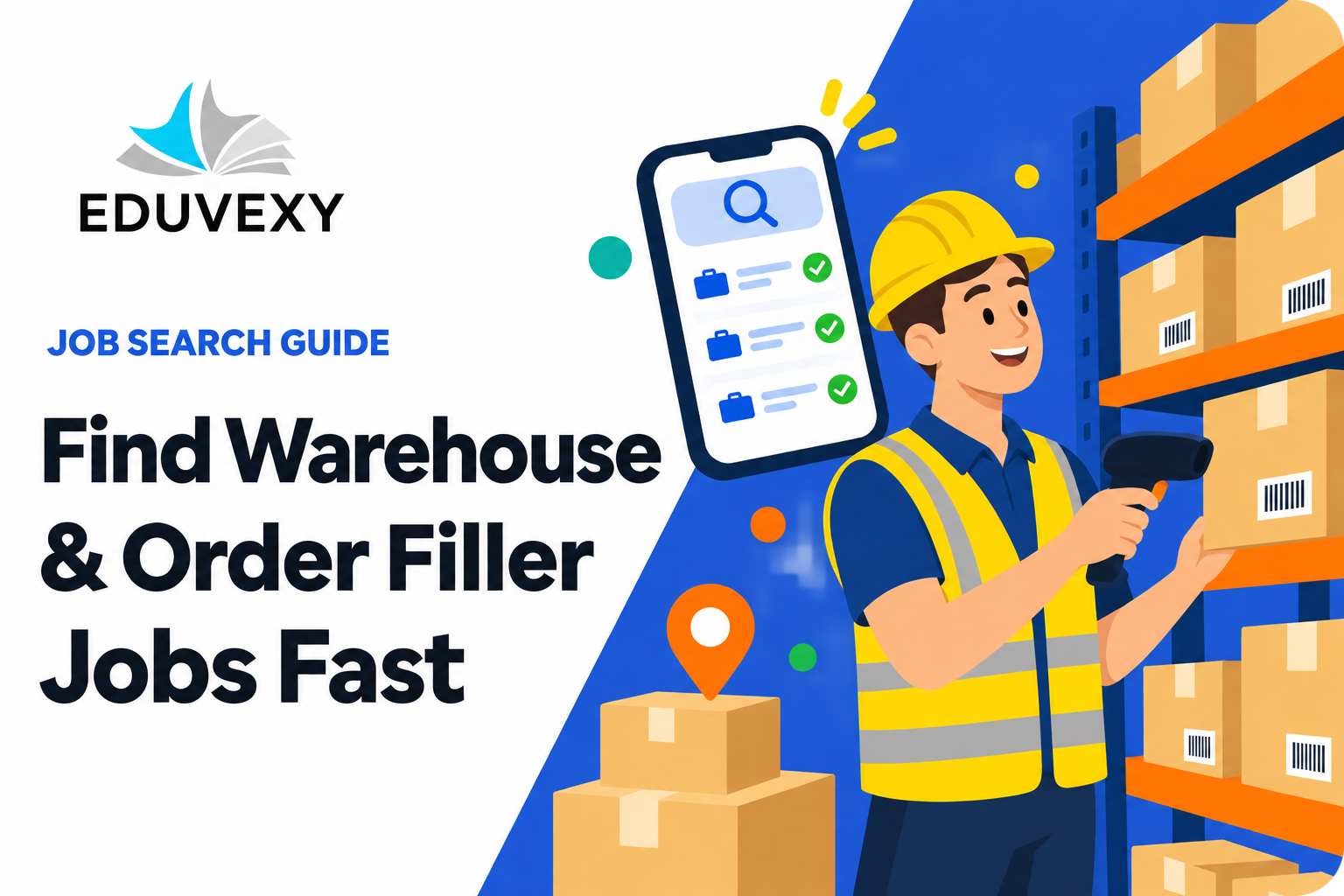
Behind every package that reaches a doorstep there is a team picking, packing and loading orders, and that demand keeps warehouse hiring active all year.
What Warehouse and Order Filler Jobs Include
The word “warehouse” covers several roles, and each one has its own pace and pay range.
- Order filler: collects items from shelves using a pick list or handheld scanner and prepares each order to ship.
- Picker and packer: selects products, checks quantities and packs boxes with the right labels.
- Forklift operator: moves pallets between docks, racks and trucks after employer safety training.
- Material handler: loads, unloads and stages freight so the rest of the floor keeps moving.
- Shipping and receiving: checks incoming deliveries, records stock and prepares outbound shipments.
- Inventory clerk: counts stock, updates the system and flags damaged or missing items.
- Sorter: separates packages by route or destination on conveyor lines.
- Team lead: guides a small crew, tracks goals and supports new hires on the floor.
Most entry-level warehouse jobs start with picking or packing, and many workers can move to equipment or lead roles within months.
Main Benefits of Warehouse Work
Warehouse jobs tend to attract people who want fast hiring, clear tasks and pay that grows with shifts.
-
Quick hiring
Many distribution centers hire on a rolling basis, so the process can take days instead of several weeks.
-
No degree needed
Most entry-level roles ask for reliability and basic skills, not a diploma or previous warehouse experience.
-
Extra shift pay
Night, weekend and peak-season shifts often pay a differential on top of the base hourly rate offered.
-
Real benefits
Larger employers usually offer health insurance, paid time off and 401(k) plans to full-time workers.
-
Room to grow
Training on forklifts, inventory systems or team leadership can open doors to higher-paying positions.
Who Hires Warehouse Workers
Warehouse hiring comes from retail, e-commerce, logistics and food distribution.
- Big retailers and e-commerce: companies like Amazon, Walmart and Target run large fulfillment and distribution networks.
- Logistics and delivery: carriers and third-party logistics firms staff sorting hubs and cross-docks.
Data from the U.S. Bureau of Labor Statistics shows millions of stockers and order fillers working nationwide, one of the largest job groups.
Pay reference: Amazon reports a minimum starting pay of $20 per hour for full-time core operations roles.
Who These Jobs Fit Best
Warehouse work usually suits people who like active days, clear goals and the chance to start earning quickly.
- First-job seekers: a practical entry point for those without a resume full of experience.
- Career changers: a fast way to restart income while learning new skills on the floor.
- Students and parents: part-time and evening shifts can fit around classes or family routines.
Most roles require being at least 18 and able to stand, walk and lift for long periods, often around 50 pounds.
How the Hiring Process Usually Works
The path from application to first shift is often short and fully online.
- Online application: you pick a location and shift, then fill in basic personal details.
- Pre-hire steps: some employers ask for a short assessment, a background check or a drug test.
- Orientation: paid onboarding covers safety rules, equipment and the tasks of your area.
Forklift operators need training and evaluation provided by the employer under OSHA rules, so a certificate is not always needed first.
Advantages and Disadvantages
Before applying, it helps to weigh what this kind of work offers and asks.
-
Low entry barrier
Many openings accept beginners and teach every task during paid training.
-
Flexible shifts
Day, night, weekend and part-time options can fit different routines.
-
Overtime chances
Peak seasons often bring extra hours paid at time and a half under federal rules.
-
Steady demand
Online shopping keeps distribution centers busy in almost every region.
-
Physical effort
Long hours on your feet, repeated lifting and walking can be tiring, especially during the first weeks on the job.
-
Productivity goals
Many sites track picks or units per hour, and keeping up with that pace may take some time and practice to reach.
-
Shifting schedules
Seasonal peaks can change your hours, and some positions end after the holiday rush unless they become permanent.
Pay, Shifts and Hiring Conditions
Pay depends on the city, the employer, the shift and the type of equipment.
- National median: about $18.12 per hour for hand laborers and material movers, based on BLS data.
- Large employers: starting rates around $20 per hour or more are common in big fulfillment networks.
- Shift differential: nights and weekends may add $1 to $3 per hour to the base rate.
- Hiring season: openings tend to peak before the holidays, but many sites hire year-round.
Always check the pay range shown on each job listing, since rates in high-cost states can be well above the average.
Why Eduvexy Recommends Warehouse Jobs
Few job categories open doors as quickly as warehouse work, especially for people who need income soon and have no degree.
We also see these roles as a learning base: equipment training, inventory systems and teamwork are skills that tend to stay valuable in logistics.
- Fast start: hiring can move from application to first shift in a short time.
- Clear pay: most listings show the hourly rate before you apply.
- Many locations: there are distribution centers near most cities and suburbs.
- Growth path: lead, trainer and equipment roles usually pay more.
What You Can Gain
Beyond the paycheck, a warehouse job can bring stability and skills that support your next career step.
- Steady income: weekly or biweekly pay with predictable hours.
- Work history: a recent, verifiable job that strengthens your resume.
- Certifications: forklift and equipment training you can list on future applications.
Many supervisors in logistics started on the warehouse floor, which shows how far this path can go with time.
How to Apply for Warehouse Jobs
The simplest way is to search job boards by role and location, then apply directly on the employer page.
- Keywords to search: “warehouse associate”, “order filler”, “picker packer” and “forklift operator” plus your city.
- Useful filters: pay range, shift, full-time or part-time and “no experience”.
You will be redirected to another site
How Warehouse Jobs Compare to Other Options
Warehouse roles often sit between retail and delivery work in pay, effort and schedule flexibility.
- Retail store jobs: more customer contact, though starting pay tends to be lower.
- Delivery driving: more independence, but may require a clean driving record and your own vehicle.
- Manufacturing: similar pace and pay, sometimes with stricter safety requirements.
Comparing listings on Indeed, LinkedIn and Glassdoor helps you see which option pays best nearby.
Frequently Asked Questions
Do I need experience to get a warehouse job?
Usually not. Many entry-level warehouse jobs train new hires from day one and focus on reliability and safety habits.
What does an order filler do?
An order filler locates items on shelves, checks quantities and prepares customer orders to ship, often using a handheld scanner.
How much do warehouse jobs pay?
BLS data puts the national median near $18 per hour, while large distribution centers may start at $20 or more depending on location.
Do I need a forklift certification before applying?
Not always. OSHA requires employers to train and evaluate forklift operators, so many companies provide this training after hiring.
Are there part-time warehouse jobs?
Yes. Many sites offer part-time, weekend and seasonal shifts, which can work well for students and parents.
Tips to Get Hired Faster
Small details in your application can make a real difference.
- Open availability: being open to nights or weekends often widens your options.
- Simple resume: highlight punctuality, teamwork and any physical or customer work.
- Job alerts: turn on notifications so you can apply when new openings go live.
- Safe footwear: having steel-toe or safety shoes ready may speed up your first day.
Applying to several nearby sites at once tends to shorten the wait for a response and an offer.
Final Thoughts
Warehouse and order filler jobs remain one of the most accessible ways to start earning in the U.S., with openings in almost every region and many employers hiring often.
The work asks for energy and attention, but it gives back clear pay, paid training and schedules that can fit different routines.
Knowing the main roles, the usual requirements and the pay ranges helps you apply with confidence and pick the shift that suits you best.
With a focused search, a simple resume and open availability, your chances of landing a warehouse job soon tend to grow, and that first role can lead to much more.

Eduvexy Team
Eduvexy publishes clear, practical content about jobs, careers and learning opportunities. Our team researches each topic, checks official sources and explains the details in simple language so readers can make informed choices about work.
Get to know our work