
Security guard jobs: pay, shifts and how to get hired
Anúncios
Over 1.2 million people work as security guards in the U.S., and employers keep posting new roles every week.
Pay, shift options and training rules shape these jobs more than anything else, and they vary a lot from state to state.
Below is a practical look at what security officer jobs pay, how schedules work and how hiring usually goes.
- Hourly median: $18.28 nationwide in May 2025, according to the BLS.
- Schooling: a high school diploma or GED is the typical starting point.
- Credential: most states ask for a state-issued guard license before or soon after hire.
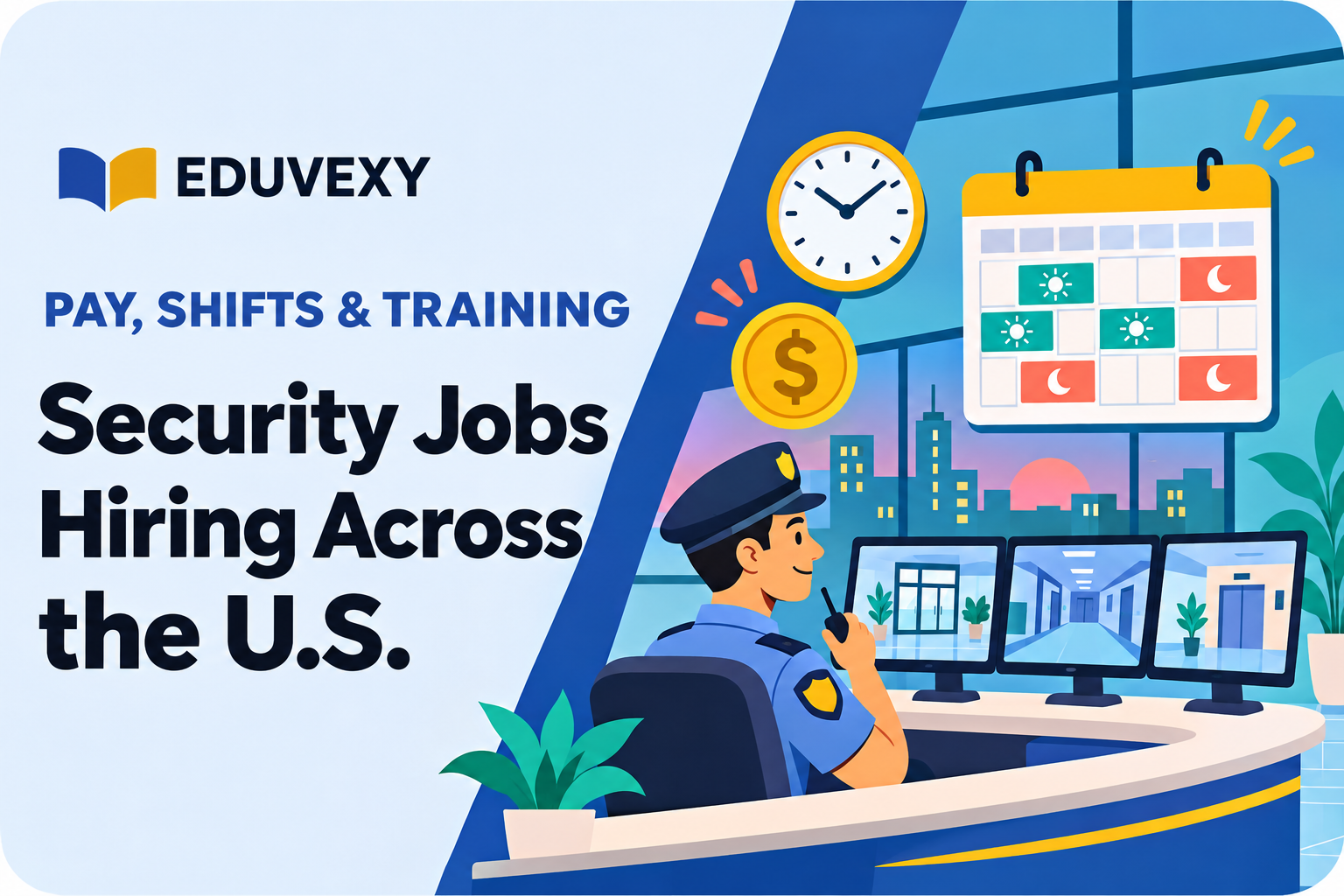
Knowing how pay and schedules are set can help you compare offers and pick the security guard jobs near you that best match your routine and goals.
What the Daily Work of a Security Officer Includes
Duties shift by site, but most posts share a common set of responsibilities.
- Access control: checking IDs and badges at entrances and loading docks.
- Patrols: walking or driving set routes to spot hazards and suspicious activity.
- Monitoring: watching CCTV feeds and alarm panels from a control desk.
- Reports: writing clear incident logs at the end of each shift.
- Customer contact: giving directions and helping visitors in lobbies and malls.
- Emergencies: calling first responders and guiding evacuations when needed.
- Event support: managing crowds at concerts, games and festivals.
- Loss prevention: deterring theft in stores, warehouses and parking areas.
Entry-level unarmed posts focus on observing and reporting, while armed or specialized roles carry more responsibility and higher pay.
What Makes Security Guard Work Worth a Look
For many job seekers, a few practical advantages put security near the top of the list.
-
Hiring all year
High turnover means many employers recruit continuously, not only during busy seasons.
-
Shift choice
Overnight, weekend and part-time security jobs are widely available for people with other commitments.
-
No degree needed
A diploma or GED plus a state license is usually enough to qualify for unarmed posts.
-
Higher pay in cities
Large metro areas such as New York and San Jose often pay well above the national median.
-
Clear next steps
Lead officer, supervisor and armed roles give experienced guards a way to raise their earnings.
Where the Pay and Hiring Data Comes From
Two kinds of sources help explain this market: federal data and the employers.
- Federal statistics: the U.S. Bureau of Labor Statistics tracks wages, job counts and outlook.
- Major employers: national firms like Allied Universal and Securitas, along with hospitals, campuses and retailers.
BLS expects employment to stay roughly flat through 2035, yet replacement needs still create a large number of openings each year.
Worth noting: BLS does not split armed and unarmed pay, so local postings give the clearest picture.
Is Security Work a Good Fit for You?
The role tends to reward reliability, patience and good judgment more than formal education or past job titles.
- Students: overnight posts at quiet sites can leave time to study.
- Veterans: military experience often translates directly into security roles.
- Job switchers: people leaving retail, hospitality or delivery work.
If you can stay alert through long shifts and handle tense moments calmly, this field may suit your skills and temperament.
How Shifts and Schedules Usually Work
Most sites need coverage around the clock, which shapes how schedules are built.
- 8-hour blocks: common at offices and retail sites, split into day, swing and overnight.
- 12-hour rotations: frequent at hospitals and industrial sites, often with more days off.
- Event work: short, flexible assignments at venues, often on evenings and weekends.
Overnight and holiday shifts sometimes come with a pay differential, which can make a noticeable difference in monthly earnings.
Advantages and Disadvantages to Weigh
A balanced view helps you decide before you invest in training.
-
Quick hiring cycles
Licensed applicants may receive offers within days, since many sites need coverage fast.
-
Extra hours available
Open shifts and overtime are common, which can help boost a weekly paycheck.
-
Jobs in every region
Nearly every town has sites that need guards, so relocating is rarely required.
-
Calm posts exist
Some assignments, like overnight lobby desks, tend to be quiet and predictable.
-
Wide pay gaps
Entry-level rates can start near $14–$17 an hour in some areas, well below what experienced officers earn.
-
Irregular routines
Rotating schedules and last-minute coverage requests can make it hard to plan family time and rest.
-
Exposure to risk
Some posts involve confrontations or emergencies, so situational awareness and training are essential.
What It Costs to Get Started
Getting job-ready usually involves a few small, one-time expenses.
- Course fees: state-approved security guard training, priced by each school.
- Fingerprinting: a background check fee, such as Live Scan in California.
- State license: Florida, for example, charges about $45 for the Class D application.
- Upkeep: yearly training hours and renewals every two years in several states.
Some employers reimburse part of these costs, so it is worth asking about it during the interview before paying on your own.
Why the Eduvexy Team Highlights Security Careers
Our team favors careers that open quickly for people without a degree. Security work stands out on that list year after year.
The rules are published by each state, the investment is small, and a license can carry you from a first part-time post to supervisory roles over time.
- Accessible entry: no college degree required for most posts.
- Constant openings: turnover keeps employers recruiting.
- Flexible hours: shifts can fit many lifestyles.
- Growth potential: experience tends to unlock better-paid roles.
Pay and Perks You Can Expect
Earnings depend on location, employer and license type, but national figures give a useful starting reference.
- Annual median: about $38,020 in May 2025, per BLS.
- Top earners: the highest 10% made around $58,840 a year.
- Common perks: paid uniforms, overtime, health plans and paid time off at many full-time posts.
Hospital, government and corporate campus posts often pay more than retail or event security in the same city.
How to Get Hired for a Security Position
Applicants with a license in hand, open availability and a tidy resume usually move through hiring the fastest.
- Job boards: filter security guard jobs hiring immediately by ZIP code on Indeed or Glassdoor.
- Company sites: apply to contract security firms and local employers directly.
You will be redirected to another site
Security Jobs Versus Other Entry-Level Options
When weighing your options, it helps to see how security compares with roles that have similar entry requirements.
- Delivery driving: flexible, but often tied to vehicle costs and variable earnings.
- Food service: quick to start, though tips and hours can swing week to week.
- Building maintenance: steady work that may require more technical skills.
Security tends to offer more predictable hourly pay than gig work, with a license that keeps its value across employers.
Common Questions About Security Jobs
What is the average security guard salary?
The BLS median was about $38,020 a year in May 2025. Local pay may be higher or lower depending on the city and employer.
Are part-time security jobs common?
Yes. Many sites and events need part-time coverage, especially on evenings, weekends and holidays.
Do overnight shifts pay more?
Some employers add a differential for night or holiday shifts. Check each posting, since policies vary.
Can I get hired without experience?
Often, yes. Entry-level unarmed posts usually ask for a license and a clean background rather than prior work history.
Does a criminal record block a license?
It can. States review criminal history during licensing, and certain convictions may lead to denial. Each case is assessed individually.
Practical Tips for Better Offers
A few habits can help you land higher-paying posts sooner.
- Compare sites: hospitals and corporate campuses often pay more than retail.
- Add credentials: CPR, first aid and fire watch training may raise your value.
- Stay flexible: covering nights and weekends early can lead to better shifts later.
- Keep records: save every training certificate in case a new employer asks for it.
Reviewing several postings in your area also gives you a realistic sense of local pay before you accept an offer.
The Bottom Line
Security guard jobs combine steady demand, short training and flexible shifts, which is why so many Americans use them as a first step or a fresh start.
Pay starts modest in many areas, but location, shift choice and extra credentials can move it up over time.
The best results tend to come from comparing local postings, asking about differentials and choosing sites that match your schedule.
With a state license, reliable availability and some patience, you may find security officer jobs that pay well and open the door to supervisory roles in the years ahead.

Eduvexy Team
At Eduvexy, we write clear, research-based content about jobs, training paths and career growth in the U.S. Every guide is built from official data and state agency rules, helping readers understand their options and take the next step with more confidence.
Learn about our work